The six problems that a roof coating has are that it’s slippery, there are strict eligibility requirements for an installation with a warranty, the roof gets dingy quickly, it’s not a good fit for gravel built-up roofs, nothing will stick to silicone besides more silicone, and it doesn’t increase the roof’s R-value.
Let’s dive into this a little more:
- Slippery – creates a safety risk when it’s wet
- Eligibility – the existing roof needs to be in decent-to-good shape before the install
- Dingy – they can get dirty
- Not cost-effective for existing Built-Up Roofing Systems
- Nothing sticks to silicone…besides more silicone
- Doesn’t increase R-value
Roof coating systems are becoming increasingly popular, and it’s not hard to see why. They’re more cost-effective than a complete roofing tear-off, provide a 10-20-year warranty, and are environmentally friendly.
But along with those advantages, they also come with disadvantages.
Restoring, repairing, or replacing your roof is an ultra-important decision, so any building owner considering it would be wise to learn all the facts.
NOTE: if you’d like to read the blog post, please continue on. If you’d like a summary of this content in video format, please watch the video below.
Here are the most common problems roof coating systems have:
1. Why does a roof coating system leave behind a slippery surface?
When roof coating systems get wet, they can be very slippery. In high-traffic areas, such as near HVAC units, a roofing contractor will add sand into the wet coating during application.
The sand provides a more stable walking area and adds some strength to withstand the abuse when HVAC panels and tools are set down.
2. What are the eligibility requirements needed to install a roof coating system?
For an existing roof to be eligible for a roof coating system, it must be in better condition than most roofs at the end of their serviceable life. Some signs of a roof in good condition include:
- The seams of the existing membrane are relatively intact
- The field of the roof has been properly maintained over its life
- Less than 25% of the underlined substrate and insulation are wet (it is still cost-effective to spot-replace small saturated areas rather than a complete replacement).
Typically, 20-30% of roofs are ineligible due to neglect or a lack of a previous maintenance program.
3. Why does a roof coating system quickly look dingy?
When a roof coating system is first installed, it’s a white/gray, shiny product of pure elegance.
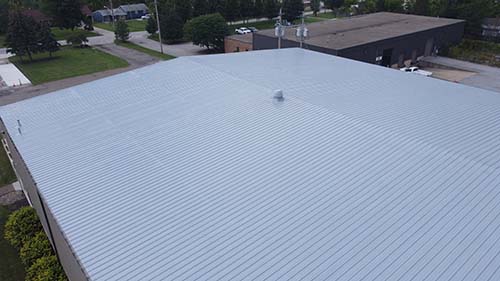
Like your new car after a few years, the shine doesn’t last.
Some of the outside elements, such as leaves, dirt, and algae, tend to stick to a roof coating system.
Having external elements on your roof coating system won’t affect the performance of the roofing solution, but it’s a foreseen issue with something so gleaming white.
4. Why are roof coating systems not cost-effective for gravel built-up roofs?
Built-up roofs tend to have uneven gravel or stones on the outermost layer of the roof. When spraying down silicone, it’s hard to get a smooth surface over this rocky area.
Some roofing contractors will lay down roof coating systems over built-up, and some won’t.
5. Why does nothing stick to silicone besides more silicone?
If you go with a silicone roof coating system, you’re pretty much stuck with that solution.
Why?
Because nothing sticks to silicone besides more silicone.
This isn’t necessarily a bad thing since silicone roof coating systems are renewable. But if you ignore routine maintenance, and the roof isn’t eligible to be recoated, you have to remove 100% of the roof before installing a new system.
6. Why doesn’t a roof caoting system increase R-value?
Roof coatings don’t increase R-value. If you’re trying to reduce energy costs with your new roof, roof coating won’t do it. According to the datasheets from the top coating manufacturers, coatings have an “unrecognizable” R-value.
The actual increase in R-value may be 0.5 since you’re adding a layer to a roof, but officially, there is no increase in R-value.
A better way to increase the R-value is to install a spray foam roofing system. Spray foam roofs increase the R-value of the existing roof by 6.5 per inch of thickness.
What’s next?
Those are the main problems with roof coating systems. You may have heard of others. Just remember to consider the source when someone tells you about everything that can go wrong with a roof coating system.
Roof coating systems are a relatively new roofing solution, so many building owners may not have had the opportunity to work with this solution.
When considering a roof coating system, it’s recommended to get advice from a roofing contractor with 40+ years of experience working with silicone.
Many of the biggest problems can be prevented by using a reliable, reputable roofing contractor.