It depends on your objective, whether you want to add insulation or want waterproofing, and if cost is a big factor.
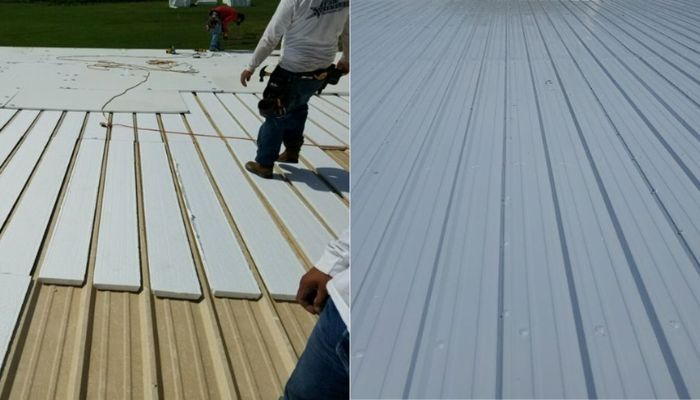
Image source: Insulfoam – Flute Fill Insulation System
We recently had an operations manager ask whether a flute fill system with TPO was “better” than a silicone roof coating. The short answer: it depends on the goal—but in most cases, it’s not the better value.
In this article, you’ll learn about:
- Cost
- Seams vs Seamless
- Do you need waterproofing or insulation?
- What happens 10-20 years from now?
- The risk of trapped moisture
If you’re collecting quotes from different contractors offering different solutions, you might be thinking, “Which solution really is best?”
Chris West, one of the owners of West Roofing Systems with over 30 years of commercial roofing experience, says it is important to understand the differences between the two roofing systems before deciding, as there are instances in which both systems win.
1. Cost: Significant Difference
Flute fill + TPO will cost significantly more than a silicone roof coating system.
Why?
- Flute filler boards must be custom-cut to match the metal roof profile
- A board needs to go on top of that
- The TPO goes on top of the board
Flute fill + TPO involves more steps, is more time-consuming, and more complex than installing a coating system.
If your roof doesn’t need insulation, you’re paying for something you don’t need.
2. Seams vs. Seamless
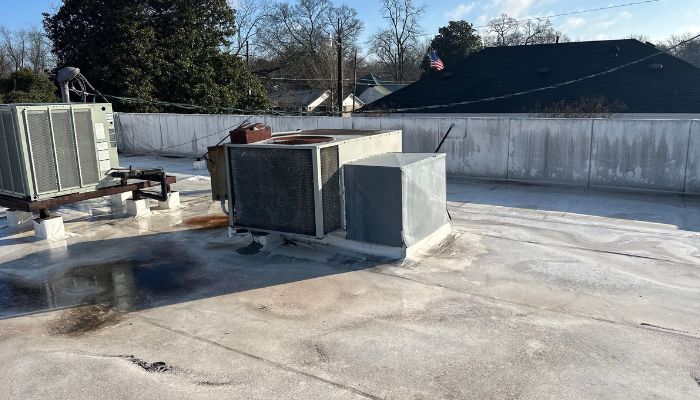
TPO systems have seams, the #1 cause of roof leaks .
Here’s a photo of an older TPO roof:
A silicone roof coating system is fully seamless :
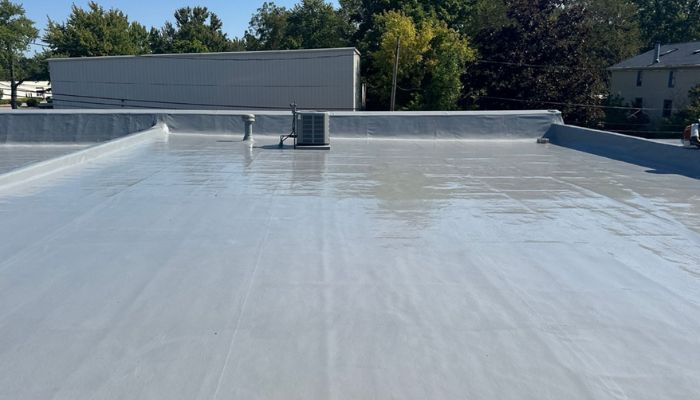
No laps. No welds. No weak points.
If your main concern is stopping leaks and keeping water out, eliminating seams is a major advantage.
3. Waterproofing vs. Insulation
This is the key question:
What does your building actually need?
- If you need R-value and energy performance , insulation may make sense
- If you need waterproofing , a coating system solves the problem directly
Many metal roofs leak—not because they lack insulation, but because they lack a watertight surface.
4. What happens 10-20 years from now?
Silicone coatings are renewable . They come with a 10–20-year warranty, depending on coating thickness.
At the end of the warranty period:
- Clean the roof
- Apply another coating layer
- Get a new warranty
No tear-off. No disruption.
With TPO, you’re dealing with a full membrane system. While restoration options may exist later, they’re not as simple or cost-effective as recoating.
5. Risk of Trapped Moisture
Adding insulation introduces another potential issue: water intrusion into the system .
If moisture gets into the insulation layer through a hole in the membrane, it can:
- Reduce performance
- Go unnoticed
- Lead to bigger issues over time
A coating system avoids this entirely—no added layers, no hidden moisture risks.
Bottom Line
For stopping leaks and extending roof life , a silicone coating system is typically:
- More cost-effective
- Lower risk
- Easier to maintain long-term
If your goal is to add insulation , then a more complex system like flute fill + TPO may be worth exploring.
If you want insulation AND a seamless membrane, the spray polyurethane foam roofing system is worth exploring.
Most building owners want a leak-free roof, not more layers.
Our advice : get a quote for both (so you can get actual project cost numbers), then weigh the pros and cons with your team.