
How Much Does a Silicone Roof Coating System Cost?
Quick Answer: As of July 2026, the ballpark cost is $3.50-$7.00 per square foot.
Several factors influence cost, such as the length of warranty desired (10, 15, or 20 years), how much tear-off and replacement (if any) is required, and location from the contractor.
If you're considering restoring your commercial roof with a silicone roof coating system, one of your first questions is probably:
"How much is this going to cost?"
The short answer is that most silicone roof coating systems cost between $3.50 and $7.00 per square foot.
For example:
- 20,000 sq. ft. roof: Approximately $70,000 - $140,000
- 50,000 sq. ft. roof: Approximately $175,000 - $350,000
- 100,000 sq. ft. roof: Approximately $350,000 - $700,000
While that provides a good starting point, every commercial roof is different.
Several factors can push the price toward the lower or upper end of that range.
In this article, we'll explain exactly what those factors are so you can better estimate your project's cost.
What Determines the Cost of a Silicone Roof Coating System?
Several variables affect the final price of a roof coating project.
1. Warranty Length (and Coating Thickness)
One of the biggest pricing factors is the warranty you choose.
Unlike many roofing systems, the warranty on a silicone roof coating system is directly tied to the amount of coating installed.
More material means a thicker waterproof membrane and a longer-lasting roof.
Typical warranty thicknesses are:
| Warranty | Silicone Thickness |
|---|---|
| 10-Year | 20 total dry mils |
| 15-Year | 25 total dry mils |
| 20-Year | 30 total dry mils |
Simply put:
More coating = Longer warranty = Higher cost.
The additional material increases both product and labor costs, but it also gives you more years of protection before the roof needs to be renewed.
If you're planning to own your building for many years, investing in a longer warranty often provides excellent long-term value.
2. How Much Wet Insulation Needs to Be Replaced
Before installing any coating system, the existing roof must be evaluated.
Most reputable contractors perform roof core samples, an infrared moisture survey, or both to determine whether water has become trapped inside the roofing system.
If wet insulation is discovered, it must be removed and replaced before the coating is installed.
Why?
Because coating over wet insulation doesn't solve the problem—it hides it.
Moisture trapped beneath a coating system can:
- Create blisters as water vapor expands
- Freeze during winter and damage the roof assembly
- Continue migrating through the roof system until it eventually leaks into the building
Consider two identical 100,000-square-foot buildings.
- Building A has 1% wet insulation.
- Building B has 10% wet insulation.
The roofing systems may appear identical from the ground, but Building B will require substantially more tear-out and replacement work before the coating can even begin.
That additional labor and materials can significantly increase the overall project cost.
3. Distance From the Roofing Contractor
Travel costs are another factor many building owners overlook.
If your contractor must:
- Fly crews to your location
- Pay for hotel stays
- Transport equipment long distances
- Ship materials across the country
those expenses become part of the project.
That doesn't necessarily mean you should always hire the closest contractor.
In commercial roofing, experience often matters more than geography.
A highly qualified contractor located several states away may ultimately save you money by installing the roof correctly the first time, while an inexperienced local contractor could leave you dealing with premature failures, leaks, and expensive repairs.
If you're evaluating contractors, it's worth learning what separates reputable roofing companies from those that cut corners.
Read our article on the warning signs to watch for:
Why Are Some Coating Companies More Expensive?
If you've received multiple proposals, you've probably noticed that prices can vary dramatically.
There are good reasons for that.
Experience
Experienced commercial roofers command higher wages than entry-level workers.
A crew member with 30 years of commercial roofing experience has installed thousands of roofing squares and understands how to properly detail penetrations, drains, seams, flashing, and other critical areas.
That expertise helps prevent leaks and callbacks.
Lower labor rates often come with less experience, and roofing mistakes can become very expensive later.
Manufacturer Certifications
Not every roofing contractor is certified to install every manufacturer's products.
Many manufacturers require contractors to complete training and demonstrate quality workmanship before they can offer manufacturer-backed warranties.
Certification helps ensure the roof is installed according to manufacturer specifications.
Safety Programs
Professional roofing companies also invest heavily in safety.
OSHA training, safety managers, equipment inspections, fall protection systems, insurance, and ongoing education all add overhead—but they also reduce risk for both workers and building owners.
Companies that ignore these investments may submit lower bids, but that doesn't necessarily make them the better value.
Where Does West Roofing Systems Fall?
At West Roofing Systems, we're rarely the cheapest proposal, and we're usually not the most expensive either.
Our pricing reflects the quality of the work we provide.
When you work with us, you're hiring a contractor that invests in doing the job correctly.
Our team includes:
- Commercial roofing professionals with decades of experience
- SPFA-certified installers
- OSHA-compliant safety personnel
- Manufacturer-trained crews
- Proven installation processes developed over more than 45 years in business
Our goal isn't simply to install a coating system.
It's to install one that performs for decades.
Looking Beyond the Initial Cost
Many building owners focus only on today's project cost.
A better question is:
What will this roof cost over its entire lifetime?
A silicone coating system allows many commercial roofs to avoid a complete tear-off when the warranty expires.
Instead of removing the existing roof and sending thousands of pounds of material to a landfill, the roof can often be cleaned, repaired where necessary, and recoated.
That creates something many facility managers value:
Financial predictability.
Rather than facing a massive capital expense every few decades, roof restoration allows you to plan for periodic renewals at a much lower cost.
If you'd like to learn more about this concept, read our article on why financial predictability is one of the most underrated benefits of roof coatings:
Are Silicone Roof Coating Systems Worth It?
For many commercial buildings, absolutely.
A properly installed silicone roof coating system provides benefits that extend well beyond simply stopping leaks.
Some of the biggest advantages include:
- Creates a seamless waterproof membrane with no exposed fasteners or seams
- Extends the life of an existing roof without a costly tear-off
- Makes future maintenance easier
- Allows the roof to be renewed with additional coating instead of replaced
- Reflects sunlight to help reduce roof temperatures and improve HVAC efficiency
- Minimizes disruption to building occupants during installation
When a roof is a good candidate for restoration, a silicone coating system can provide decades of reliable performance while significantly reducing lifetime roofing costs.
Recently Completed Silicone Roof Coating Projects
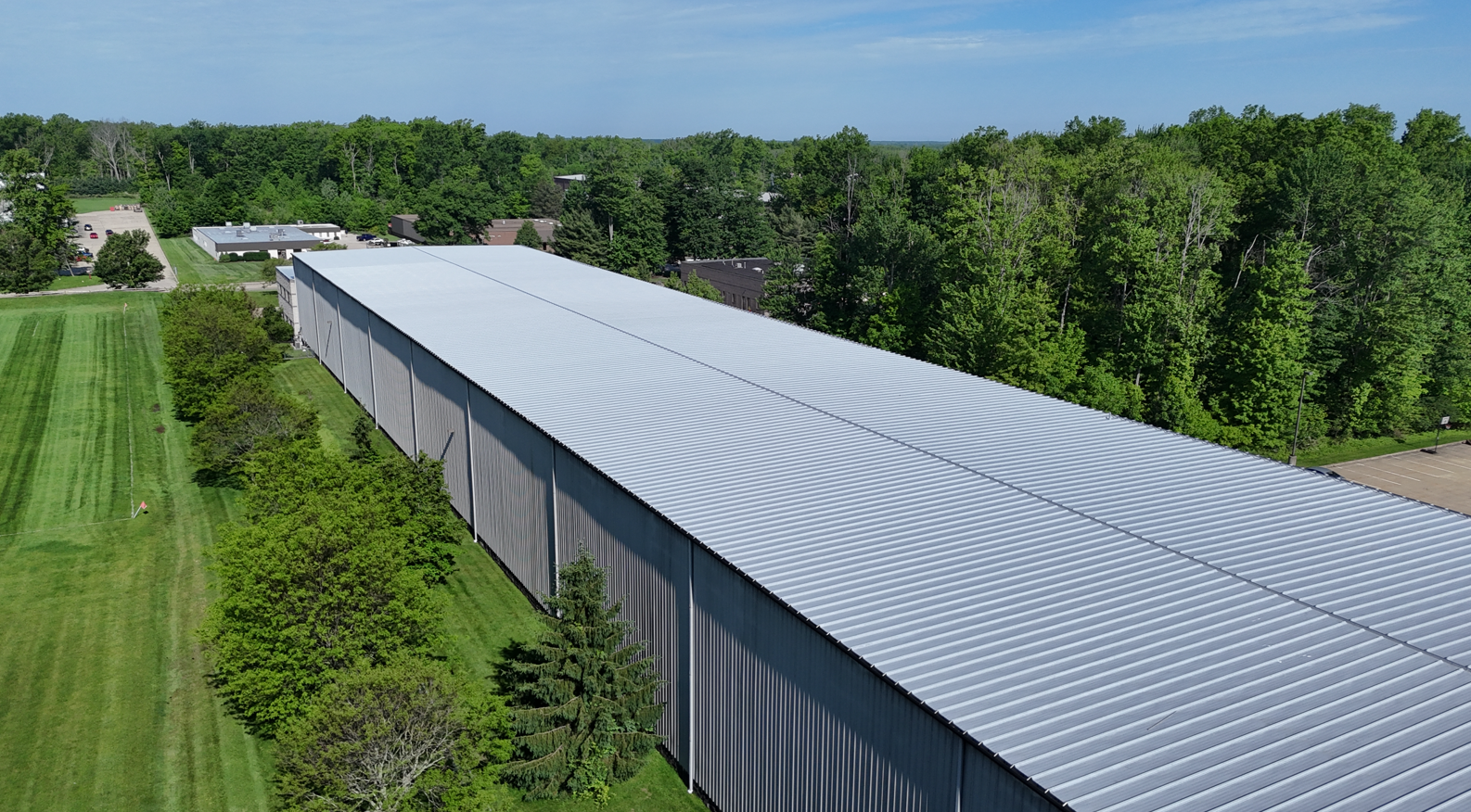
Project Name: Bearing Manufacturing
Location: Strongsville, Ohio
Size: 63,950 square feet
Warranty: 10-years
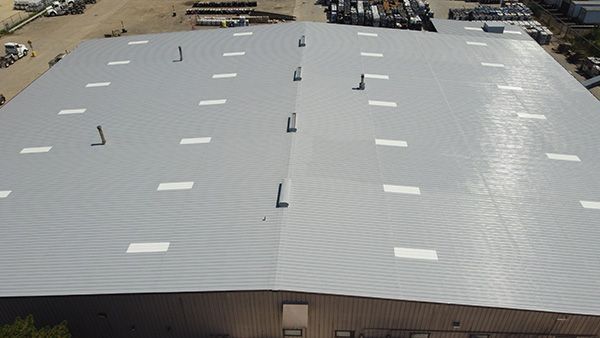
Project Type: Silicone roof coating system over existing metal roof
Completed Date: May 2026
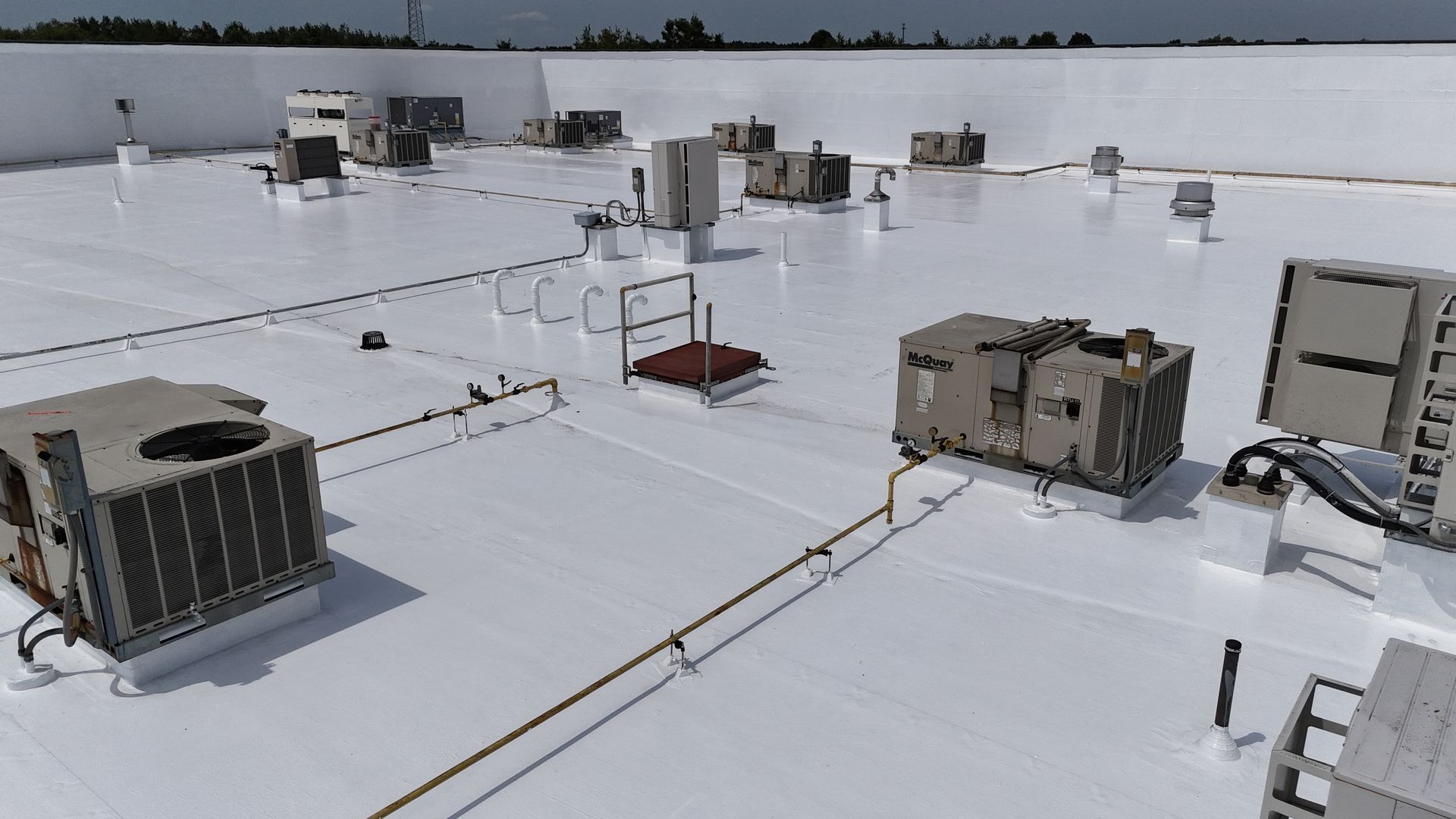
Project Name: Wooster Orthopedics
Location: Wooster, Ohio
Size: 21,128 square feet
Warranty: 20-years
Project Type: Silicone roof coating system over existing EPDM roof
Completed Date: July 2025
Final Thoughts
Most silicone roof coating systems cost between $3.50 and $7.00 per square foot, but the final price depends on several factors.
The biggest cost drivers include:
- The warranty length you choose
- The amount of wet insulation that must be replaced
- The contractor's travel requirements
- The experience, certifications, and quality of the roofing company performing the work
While every building is different, understanding these factors will help you evaluate proposals and make a more informed decision.
If you'd like an accurate price for your building, the best first step is a roof inspection. A qualified contractor can evaluate your roof's condition, determine whether it's a good candidate for a silicone coating system, and provide a detailed estimate based on your specific needs.