Quick Answer: Installing a silicone roof coating system is the most cost-effective way to repair/restore a torch-down roof. However, if the roof’s seams are in poor condition and the roof has been neglected for years, it might not be eligible for a coating system. In that case, spray polyurethane foam might be the better option.
So, you have a torch-down roof and you’re looking into repair options. You’re also probably wondering about cost, warranties, if you need to rip everything off, etc.
In this post, you’ll learn:
- What’s the first thing a commercial roofing contractor will do?
- What repair options will you have?
- What are the costs and warranties?
- What should you do now?
I wanted to point out that we only write articles based on true events and experiences. West Roofing Systems has been in spray foam roofing since 1979. Every piece of content written is produced in-house. And every article is reviewed and edited by a roofer/salesman with 30+ years of field experience.
Let’s get started!
What’s the first thing a commercial roofing contractor will do?
The first thing they will do is collect as much information as possible about your roof from you. Questions they might ask you are:
- How old is the roof?
- How many roofing systems are installed?
- Is your torch down roof 2 or 3 plies?
- How much leaking is happening?
- Are the seams intact?
Then the contractor will want to schedule time with you to get onto the roof. They will be looking at seam integrity, how much of the insulation is wet, and whether the membrane is eligible for restoration.
Once all data has been collected, a contractor can provide repair recommendations.
What repair options will you have?
If you already have two or more roofing systems installed, you will need to remove at least one system before installing another. The building code states that the maximum number of roofing systems on a commercial building is 2.
If your torch-down roof is in good shape, meaning:
- The seams and membrane are intact
- Less than 25% of the roof’s insulation is wet
- There’s been at least annual maintenance on the roof
You can install a roof coating system over your existing torch-down roof, avoiding the costly complete tear-off.
This is because roof coating systems are considered “maintenance” and not another “roofing system”. The cost for a coating system is $3.50 – $7 per square foot.
What happens if you only have one roofing system installed?
If you only have one roofing system installed, then you can install any roofing system you’d like. Just make sure you identify and remove all the wet insulation first.
One roofing system that might be cost-effective for you is a spray polyurethane foam roof.
This is because foam can be installed right over the torch down roof without a coverboard, any insulation, or any added materials to create slope.
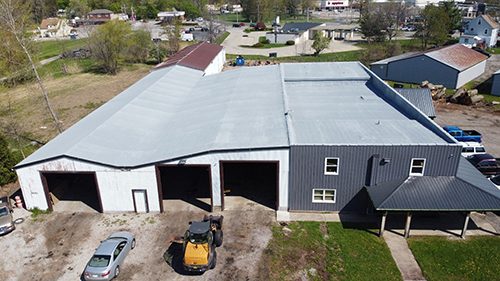
If the torched-down membrane is aged and has some loss of adhesion, a contractor can put screws and plates in those needed areas, then apply foam over the roof.
This can save a torched-down roofing owner the cost of removing the entire roof and transporting the materials to a landfill.
If you are new to spray polyurethane foam roofing, here’s a blog post that explains the basics:
“Blog post – What are the basics of Spray Polyurethane Foam (SPF) Roofing?”
You can also consider installing a single-ply roof, such as TPO or EPDM.
These rolled-out sheets can be installed right over your existing torched-down roof. You might need to watch out for low areas where standing water can occur.
To eliminate standing water, you might need to install a tapered, polyiso system, which can be costly and labor-intensive.
You can also consider more “torch down plies”
This probably isn’t the greatest option. One, because most torched-down roofing companies have moved onto other systems, such as spray foam, single-plies, or roof coating systems.
Two, torched-down roofing is messy and it’s a fire hazard working with an open flame.
What are the costs of commercial roofing systems?
- Spray polyurethane foam – $5 – $10 per square foot
- Silicone roof coating system – $3.50 – $7 per square foot
- Gravel built-up – $6.50 – $10 per square foot
What warranties come with certain commercial roofing systems?
Because we’ve been in the spray foam and roof coating system industries since 1979, both spray foam and coating systems have similar warranties:
- For a 10-year warranty, 20 mils of coating need to be installed
- For a 15-year warranty, 25 mils of coating need to be installed
- For a 20-year warranty, 30 mils of coating need to be installed
Warranties for single-ply and torch-down roofs range from 10 to 20 years.
Since every roofing system can come with a similar warranty, the most important things to consider are:
- Will the contractor be in business for the length of the warranty?
- And if they disappear, who honors the warranty going forward?
What should you do now?
The first thing you should do is find a few roofing contractors. Have them each come to your torch down roof and submit their recommendations.
You might find that some contractors are offering different solutions (or a completely different roofing system) that other contractors aren’t.
But having multiple opinions (and getting different cost numbers) will help you in making the right choice for your situation.